Tag Archives: China

Quanzhou & Xiamen cont’d

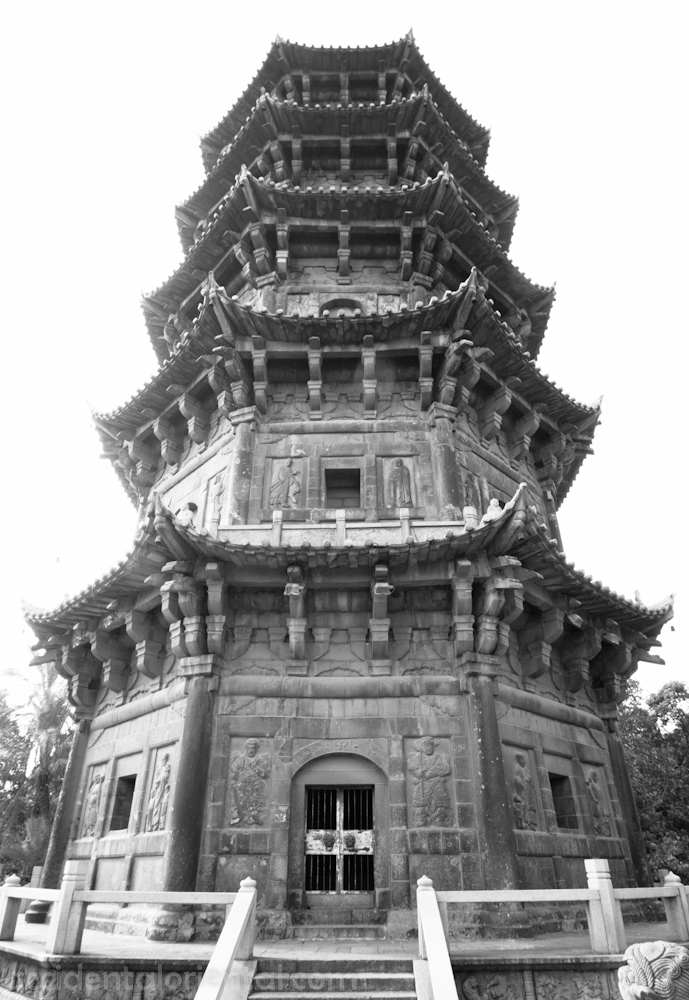
Kaiyuan Pagoda

The 44m high West Pagoda, one of two at Quanzhou’s Kaiyuan Temple complex, a Buddhist temple first constructed in the year 686 AD. The temple stands at the west end of Xi Jie (West Street), a bustling thoroughfare recalling the China of the past, of tiny ramshackle businesses, chaotic congested streets, honking buses and outdoor food stalls.

20131222-IMG_5402

A monk trains a young boy in the yard at Kaiyuan Temple in Quanzhou.
20131222-IMG_5375

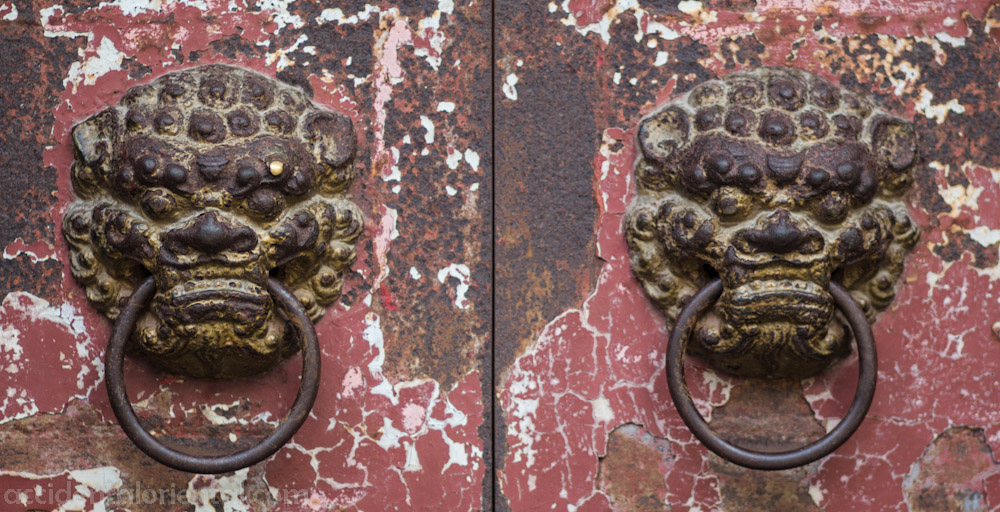
Door handles on the East Pagoda at Kaiyuan Temple in Quanzhou.

20131222-IMG_5455

A doorway on Quanzhou’s Xi Jie. The city seems to be awakening from a tourist slumber, cleaning up the old parts of the town and erecting plaques in English and Chinese explaining the history of the area.

20131208-IMG_5276

An egret on Xiamen’s Yundang Inner Lake.

20131208-IMG_5270

A family walking along the western edge of Xiamen’s Yundang Inner Lake.

20131224-IMG_5552

The food markets near Xiamen’s pedestrian shopping street, Zhongshan Lu.
20131224-IMG_5544

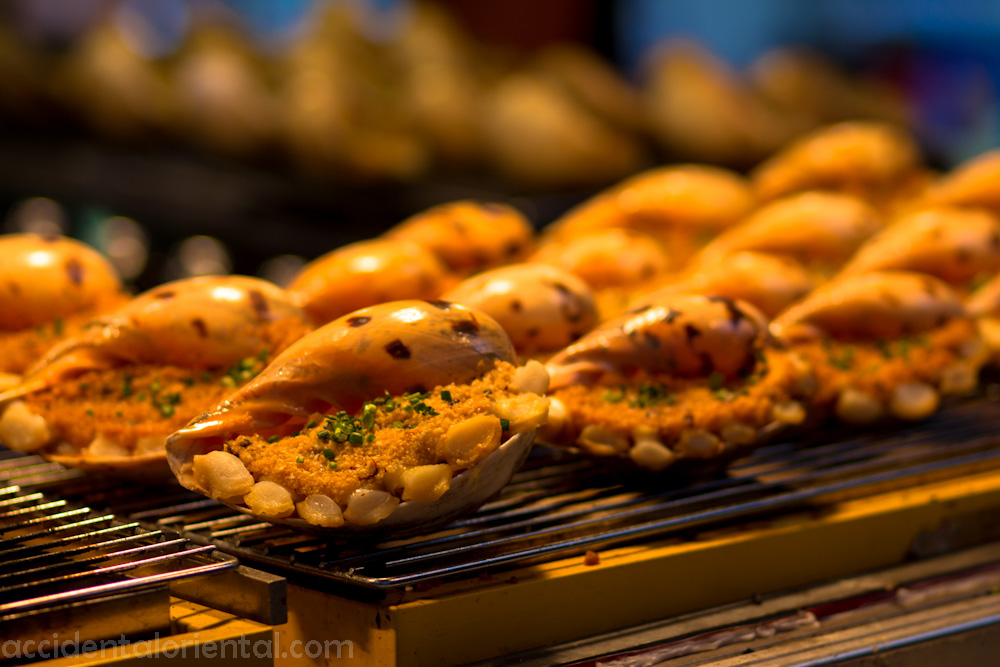
Seafood cooked in its shell in the streets around Zhongshan Lu. Xiamen is famous in the rest of China for its seafood.

20131223-IMG_5484

Xiamen’s south-west shore in the distance, as seen from the highest point on the nearby island of Gu Lang Yu. Gu Lang Yu has historically been the preserve of foreigners, working in embassies and living in ostentatious villas, giving the island a colonial European atmosphere that helps make it a top-3 destination for Chinese domestic tourism.

20131223-IMG_5516

Workers unloading construction materials from boats on Gu Lang Yu, an island that is practically free of vehicles.

20131223-IMG_5520

This means that bricks and sand and cement and everything else gets pulled by men using handcarts like these.

20131223-IMG_5527

A dapper man in a suit jacket on a sampan sorts his catch for the day on the eastern shore of Gu Lang Yu.
20131223-IMG_5508

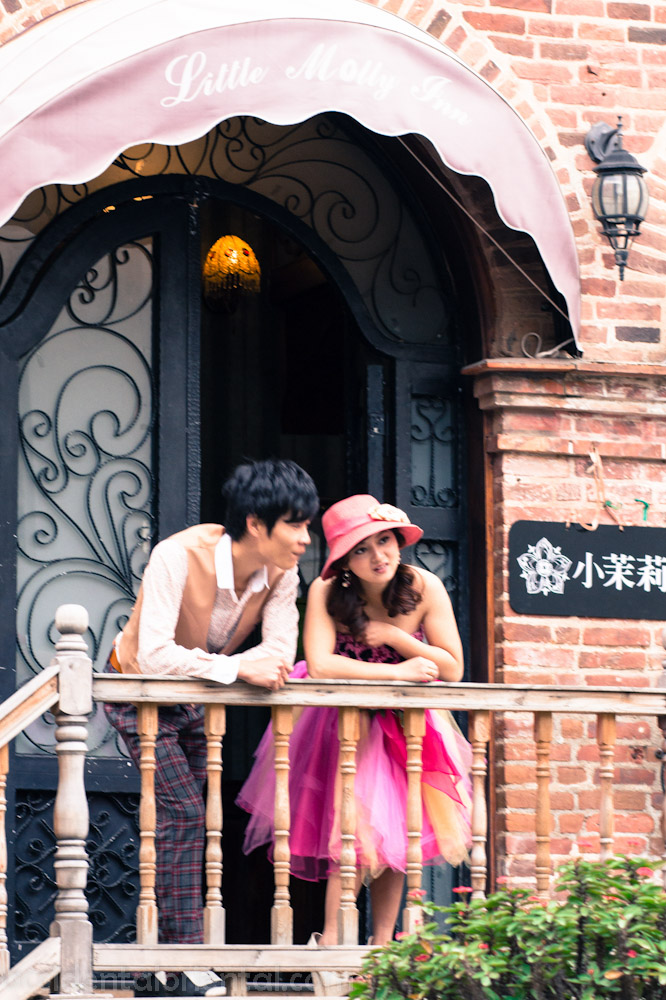
Because of its quaint architecture and scenic locations, the island is hugely popular with local newlyweds, who often eschew the black-and-white traditions we’re used to and go for colourful dresses and hipster vests.
20131225-IMG_5592

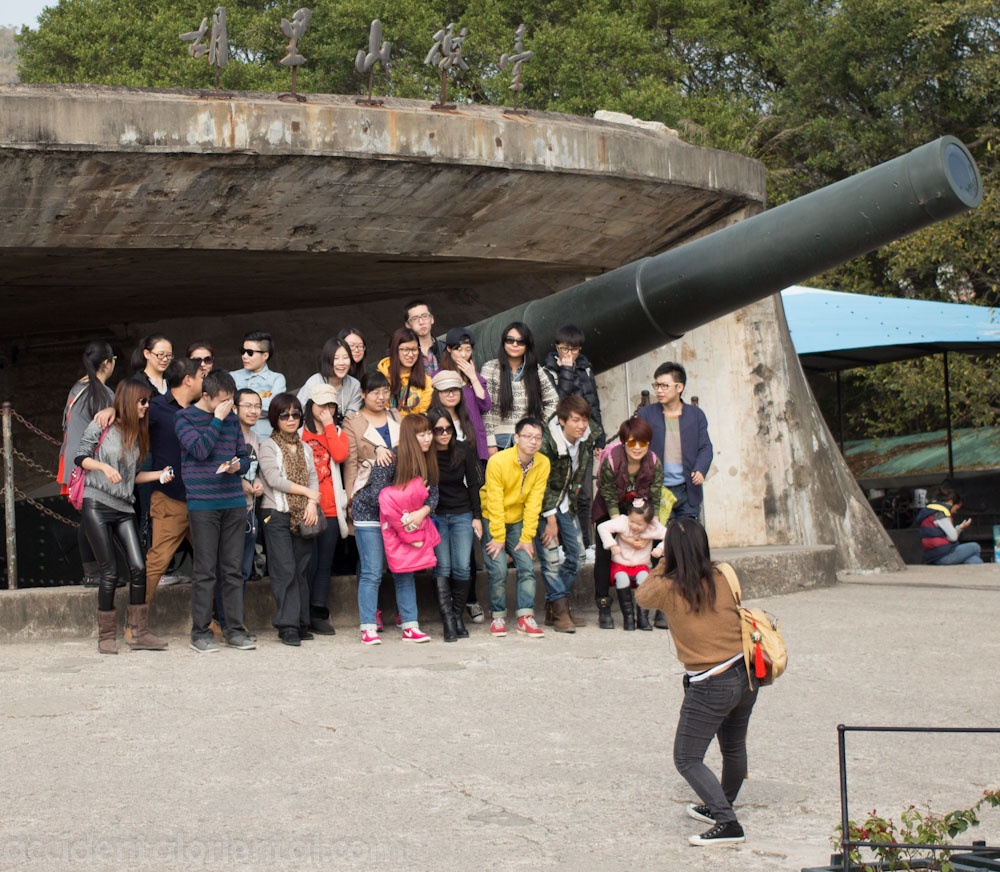
Back on Xiamen itself, a tour group prepares for a photo in front of the 280mm German-built cannon at Huli Shan Fortress on the island’s southern shore.

20131225-IMG_5602a

The fortress occupies 13,000 square metres and has a collection of cannons, of which the 280mm, with its 7km accurate range, is the largest. It claimed a Japanese destroyer in 1941 and has a large feature about that event. More recent hostilities have been with the nationalist-controlled Taiwanese island of Jinmen, to the east of Xiamen. Whether those events are less important, or just that they don’t fit neatly into the Chinese national myth perhaps time will tell.
1 Comment

Filed under Uncategorized

Quanzhou & Xiamen

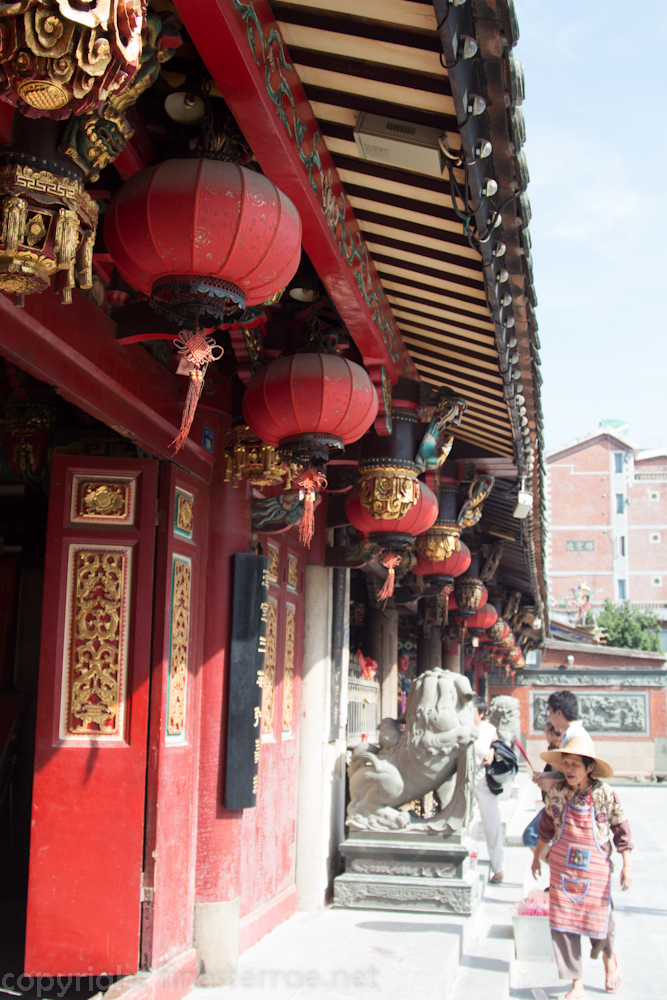
The Guandi Temple in Quanzhou, Fujian province in China. Quanzhou, about 45 minutes on the train from Xiamen, was once a bustling traders' town at the end of the maritime silk road. The temple stands next to what is left of a 1000 year old mosque, built by the Arab, Persian and Indian traders.

The Guandi Temple in Quanzhou, Fujian province in China. Quanzhou, about 45 minutes on the train from Xiamen, was once a bustling traders’ town at the end of the maritime silk road. The temple stands next to what is left of a 1000 year old mosque, built by the Arab, Persian and Indian traders.

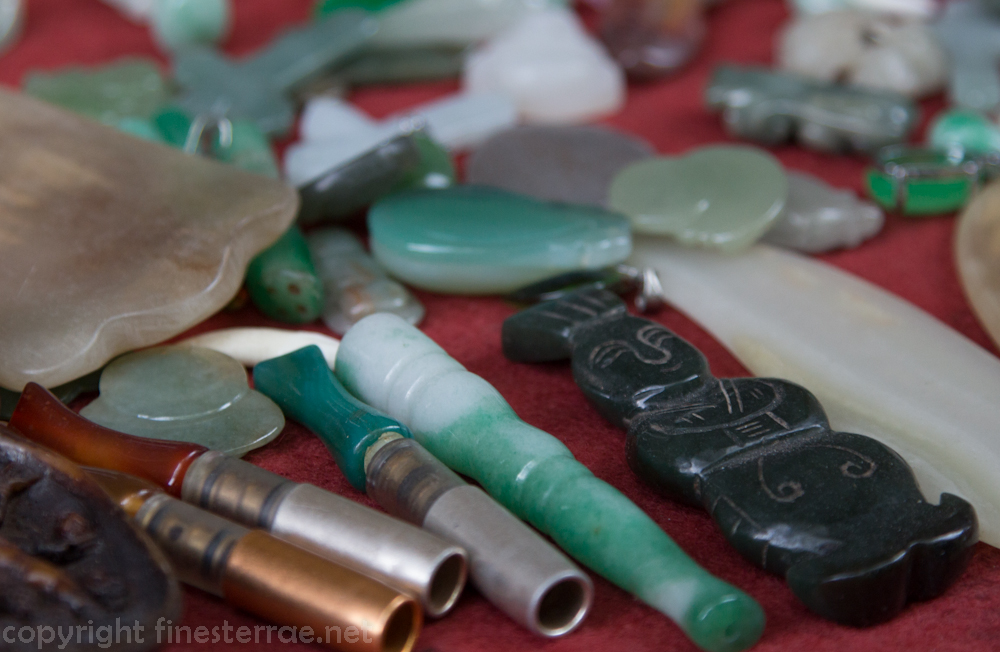
Reminders of another significant part of the region's history, opium pipes for sale in Quanzhou's markets.

Reminders of another significant part of the region’s history, opium pipes for sale in Quanzhou’s markets.

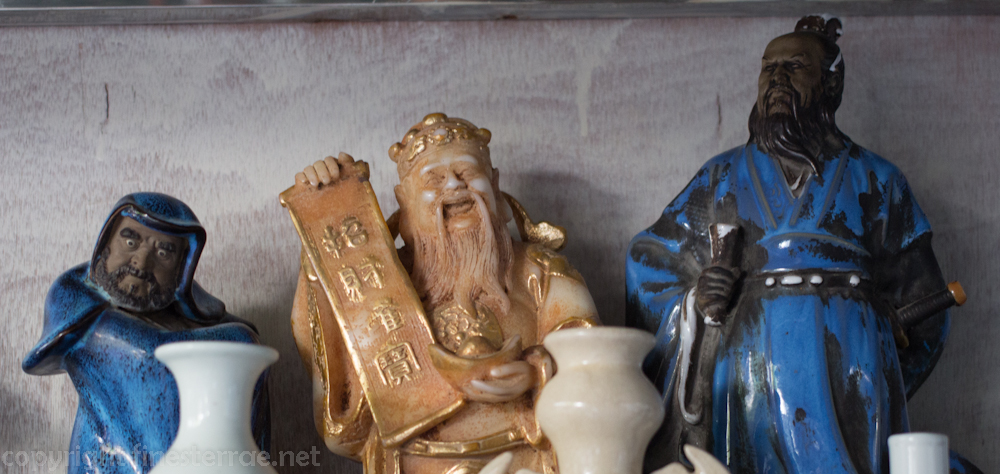
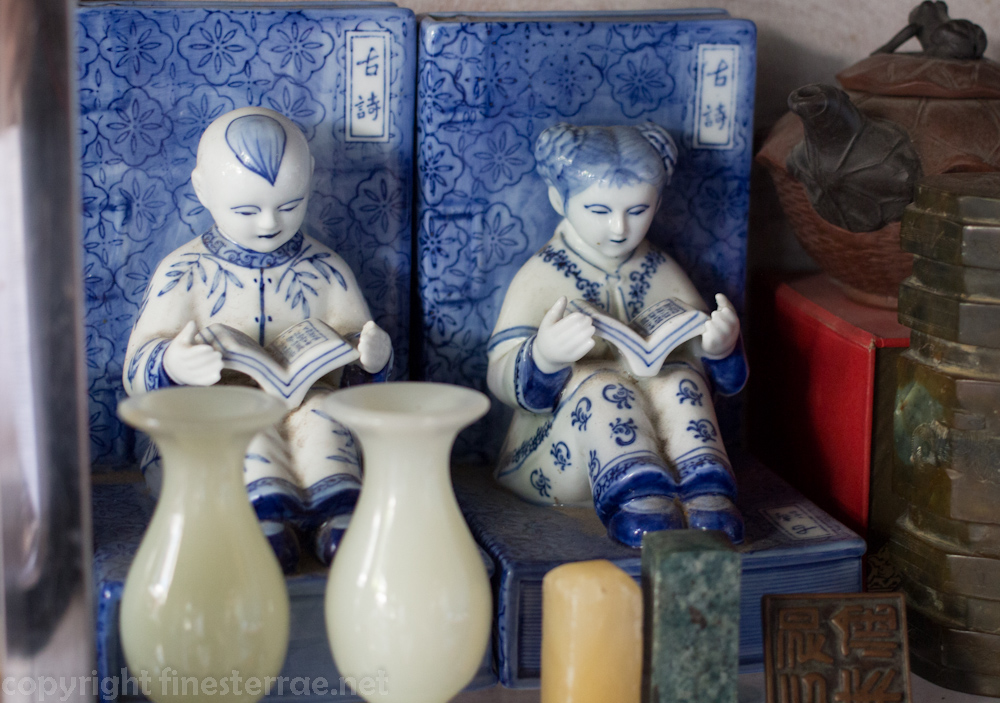
Ornaments for sale in the markets near Quanzhou's 1000-year old mosque.

Ornaments for sale in the markets near Quanzhou’s 1000-year old mosque.

Ornaments for sale at the markets near Quanzhou's 1000-year old mosque.

Ornaments for sale at the markets near Quanzhou’s 1000-year old mosque.

A bridge over the Yundang Inner Lake in Xiamen, Fujian province, China

A bridge over the Yundang Inner Lake in Xiamen, Fujian province, China

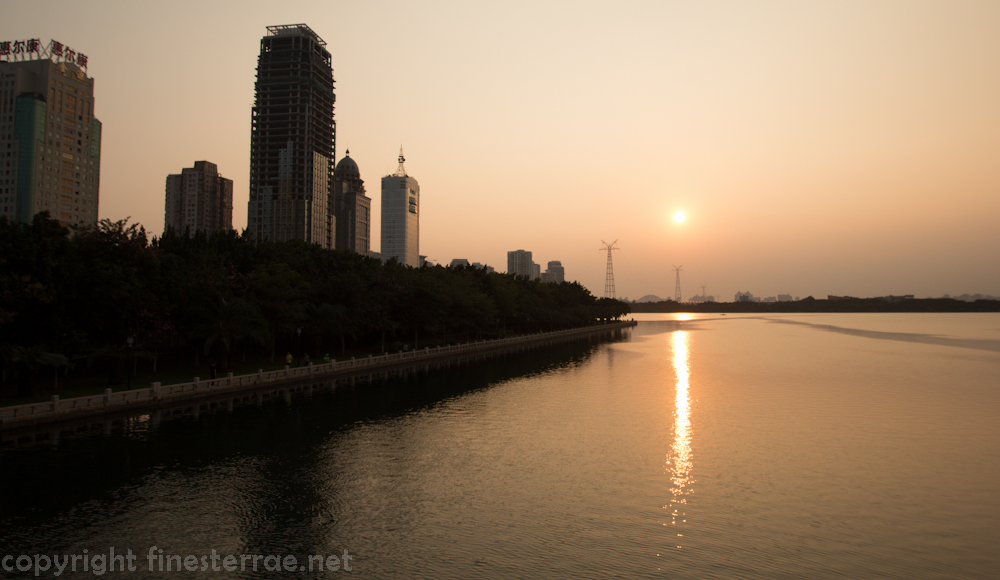
Sunset view of the south shore of Xiamen's Yundang Inner Lake.

Sunset view of the south shore of Xiamen’s Yundang Inner Lake.

A girl and her father fishing on Xiamen's Yundang Inner Lake.

A girl and her father fishing on Xiamen’s Yundang Inner Lake.

Three egrets on the rapids of the inlet to Xiamen's Yundang Inner Lake.

Three egrets on the rapids of the inlet to Xiamen’s Yundang Inner Lake.

An egret on the rapids at the inlet to Xiamen's Yundang Inner Lake.

An egret on the rapids at the inlet to Xiamen’s Yundang Inner Lake.

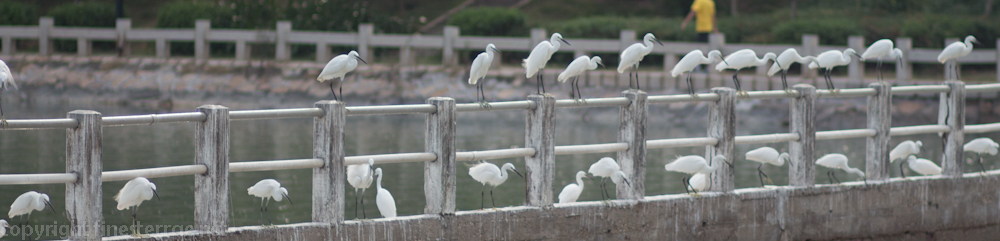
Egrets lined up to swoop for fish in the rapids at the inlet to Xiamen's Yundang Inner Lake.

Egrets lined up to swoop for fish in the rapids at the inlet to Xiamen’s Yundang Inner Lake.

Flowers in Xiamen's Huweishan Park.

Flowers in Xiamen’s Huweishan Park.

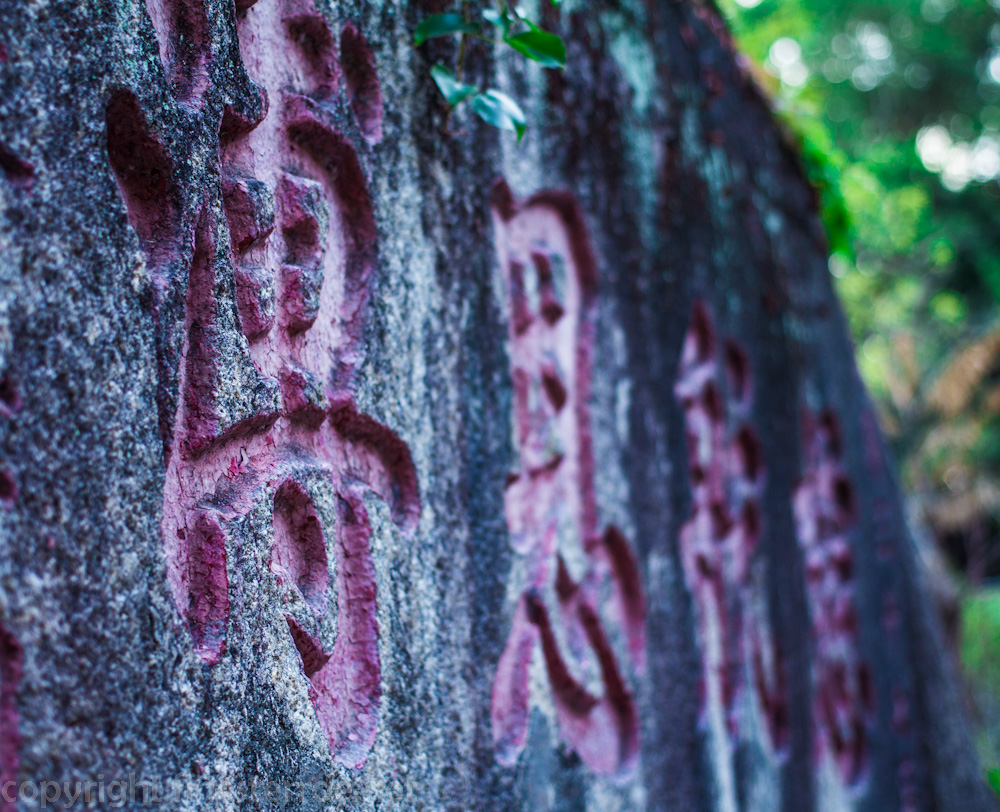
A rock carving at Xiamen's Nanputuo Temple.

A rock carving at Xiamen’s Nanputuo Temple.

Kids at sunset at Xiamen's Nanputuo Temple.

Kids at sunset at Xiamen’s Nanputuo Temple.

Leave a comment

21 October, 2013 · 21:09

A Hotel Review

Big Hotels are stuck in the past. They are vast bureaucracies that deliver large amounts of what we don’t want (gym, spa, mini bar) and struggle to provide us what we do want when we’re travelling (wireless internet, the will to live).

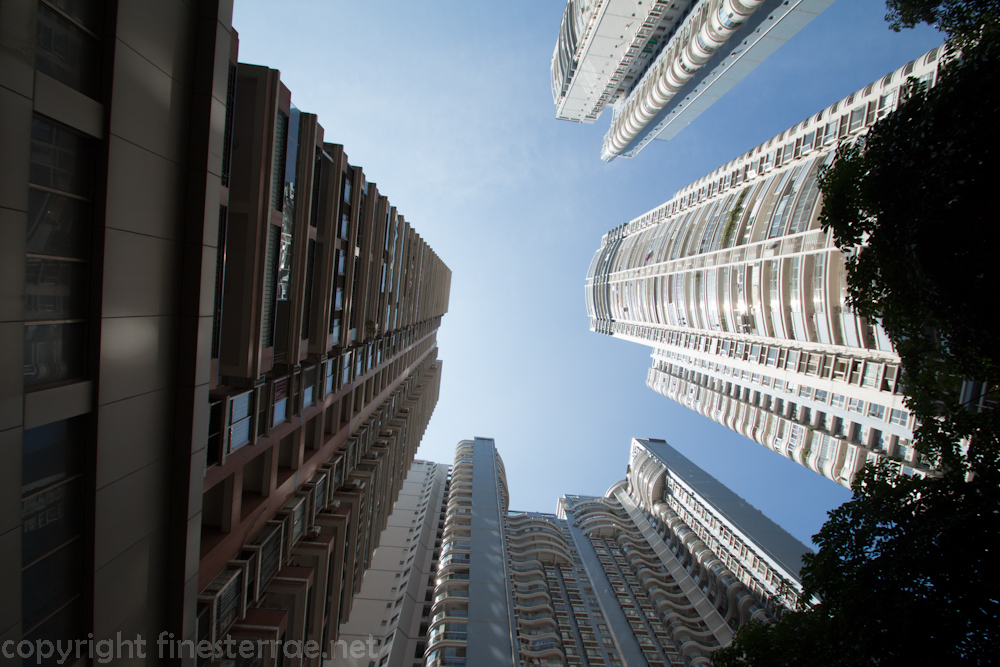
A block of apartments near the Pan Pacific in Xiamen, China

A block of apartments near the Pan Pacific in Xiamen, China

I grew up in a business traveller’s city (Singapore) in the golden era of the business traveller (the 80s). As an adult I’ve rarely chosen to spend my own hard-earned on them, but the chain hotel still occupied a kind of heavenly place in my mind, and I would look enviously at those folk who could afford to stay in them.

The chain hotel flourished in the shrinking world of the 1980s, when the cost of international air travel fell within the orbit of growing multinational companies. The companies would send their hard-working men (mostly men) away to far-flung places to win work or find suppliers, and usually these men wanted nothing more than to be back at home. The hotels couldn’t replicate home, so they didn’t even try – at great expense, they provided a kind of Willy Wonka’s Chocolate Factory for adults – all the things he couldn’t have or wasn’t allowed at home: an array of tiny bottles of top-shelf liquor, a fully equipped gym, heated swimming pool, buffet breakfast, endless pornography… They promoted their brands as luxury items. Like expensive watches and German-built cars, they alone could make you feel good about yourself. If you stayed at the Sheraton, or the Hilton, or the Intercontinental, you’d made it. Every little added comfort was at extra cost, but these men weren’t paying, so they didn’t care. They drank in the self-worth without any of the cost, and the companies shelled out to keep them happy.

Hong Kong from the Star Ferry to Tsim Sha Tsui

Hong Kong from the Star Ferry to Tsim Sha Tsui

Today we’re into the second decade of the 21st century and the 80s are a distant memory. The 5-star hotel chains still advertise in patronising soft-focus black-and-white in the Economist magazine, and their neon still lights the skylines of global cities. But stay in one today and it’s impossible not to get the feeling that they’ve been left behind by the rest of the world. Drop your bags on the bench and look around the room and it’s not the mini bar you’re interested in, or the quality of the complimentary stationery – you’re looking for a power point to charge your phone and a wireless network to check your emails. And 100+ room hotels that have been around for decades are uniformly woeful at providing either of those. Where are all the power points? Did people not need electricity in the 80s? Worse still, many of them take pleasure in charging premium daily rates for an internet connection far less reliable than your own $50-a-month plan at home. You open the fridge to survey the mini bar and speculate that there’s nothing in there that can’t be bought at the 7-11 across the road for literally a fraction of the price. You pick up the glossy hotel pamphlet and see the smiling faces on gym machines (you know the gym will be dark and airless), the 24-hour room service menu (how often do you need a ham sandwich at 3am?), and the list of pay-per-view blockbusters on offer (you’ve already got all the new movies you want loaded onto your laptop or iPad). The ubiquitous telephone is still there too, stalking you next to your head at night. But it’s only for emergencies – if the hotel is doing everything right, you won’t have a single use for it.
In fact, the only truly modern things that seem to work well in these hotels are the electronic card locks. But they’re not there for you, they’re there so reception can lock you out after 12 noon with the push of a button.

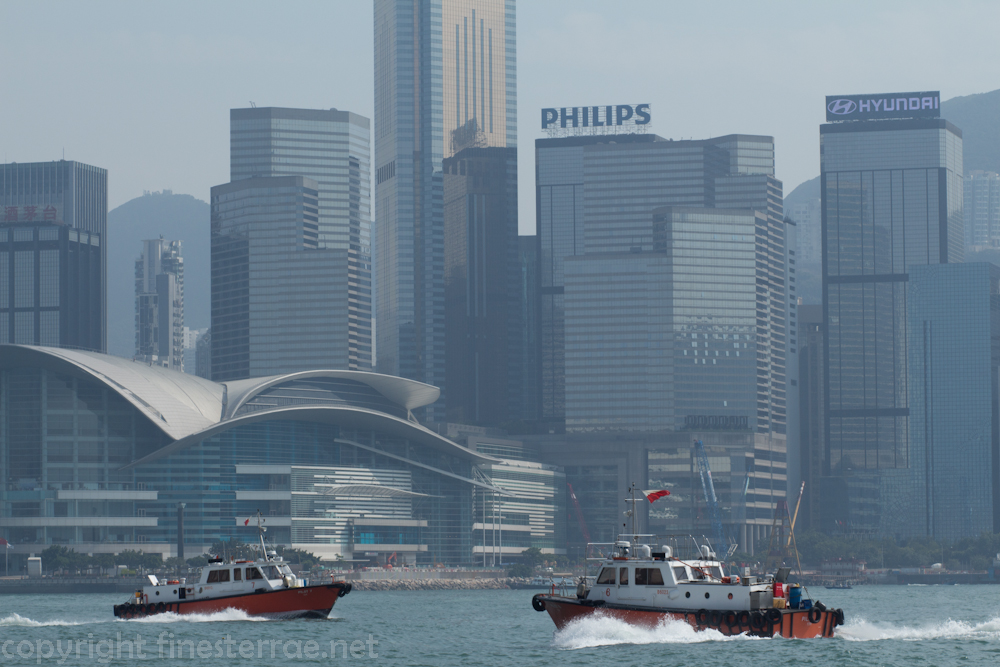
The Hong Kong skyline from the Avenue of the Stars on Kowloon peninsula

The Hong Kong skyline from the Avenue of the Stars on Kowloon peninsula

Placed alongside boutique hotels and Airbnb-style private rentals, the chain hotels, regardless of how many stars they think they are, leave travellers feeling cold and unsatisfied. The guests are herded like cattle and stacked like battery hens, the reception desks are staffed with overworked smiles, the pools attended by bored gentlemen with sullen faces and your complimentary cocktail is served by a costumed kid who doesn’t even drink. All you really want from them is a clean comfy room, a decent Skype connection, and someone who can tell you where a good restaurant is, and the small hotels and private-leased apartments do a far better job of that. With companies still sending their people enmasse to stay at these dinosaur chain hotels, these days it’s the businessmen who are envious of the rest of us.

Leave a comment

Filed under Uncategorized