Category Archives: Uncategorized

Iran

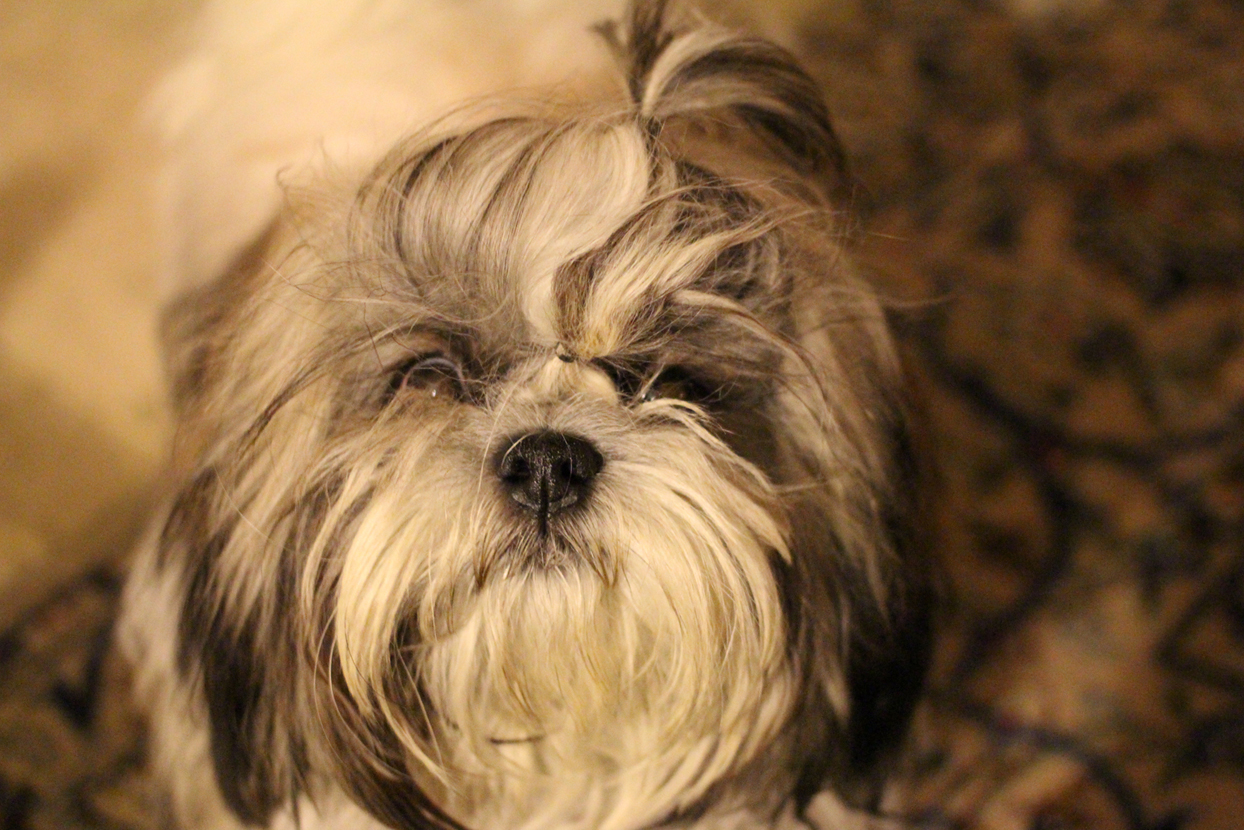
My Tehran friend's cousin's dog Shanti. He's about 12 months old. He's only a little shih tzu but my friend's rottweiler is scared of the little guy. Dogs are popular as pets in wealthier parts of Tehran.

My Tehran friend’s cousin’s dog Shanti. He’s about 12 months old. He’s only a little shih tzu but my friend’s rottweiler is scared of the little guy. Dogs are popular as pets in wealthier parts of Tehran.

Shaman, my friend's 9 month old rottweiler, who came to my room with this face each morning. They didn't choose her but they've fallen in love with this little girl. In Iran you can have your dog seized for simply walking them in public. They take the dogs to Evin Prison (seriously) and leave them to die. So, with a typically Iranian solution, they have worked out that they can train her to be a rescue dog in an earthquake, and then they can take her for long walks and the government can't take her away.

Shaman, my friend’s 9 month old rottweiler, who came to my room with this face each morning. They didn’t choose her but they’ve fallen in love with this little girl. In Iran you can have your dog seized for simply walking them in public. They take the dogs to Evin Prison (seriously) and leave them to die. So, with a typically Iranian solution, they have worked out that they can train her to be a rescue dog in an earthquake, and then they can take her for long walk and the government can’t take her away.
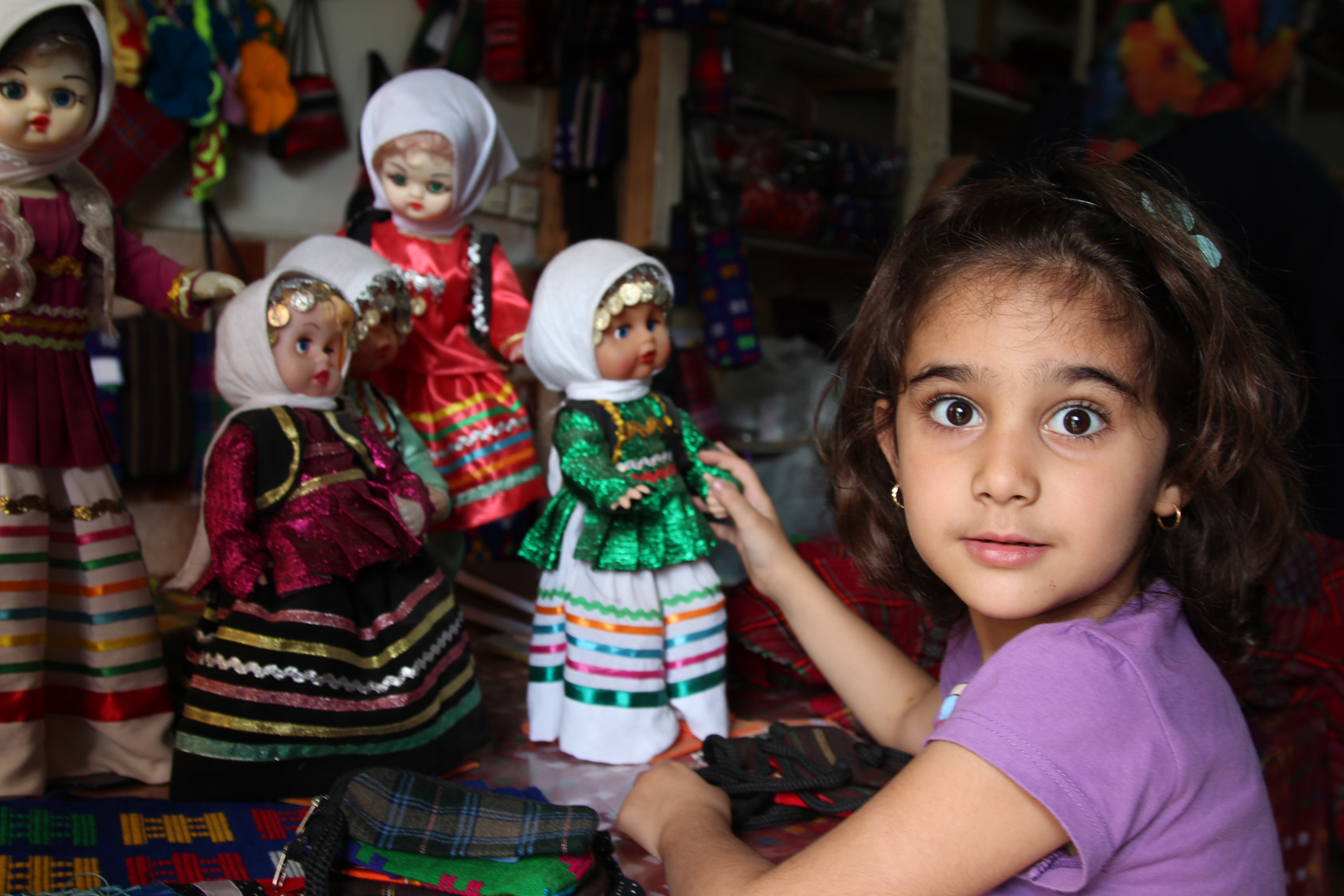
In the Caspian province of Gilan, my friend Zia's friend's daughter Vanusheh plays with dolls dressed in typical Gilani dress. The dress (and Vanusheh) show that Iranians are far more lively, colourful and cheeky than the Islamic Republic would like us to believe. Iranians in general don't feel part of the Islamic Republic  - at best they have learned to work around the government's entrenched corruption and criminality in the name of god - but a great many despise it and wake up each morning wanting it gone.

In the Caspian province of Gilan, my friend Zia’s friend’s daughter Vanusheh plays with dolls dressed in typical Gilani dress. The dress (and Vanusheh) show that Iranians are far more lively, colourful and cheeky than the Islamic Republic would like us to believe. Iranians in general don’t feel part of the Islamic Republic – at best they have learned to work around the government’s entrenched corruption and criminality in the name of god – but a great many despise it and wake up each morning wanting it gone.

A boat on the Caspian Sea. The sand is dark and sometimes pebbly, and the waves aren't great. But this lush green region in the north is where many Iranians come to get away from the dry heat of the country.
A boat on the Caspian Sea. The sand is dark and sometimes pebbly, and the waves aren’t great. But this lush green region in the north is where many Iranians come to get away from the dry heat of the country.

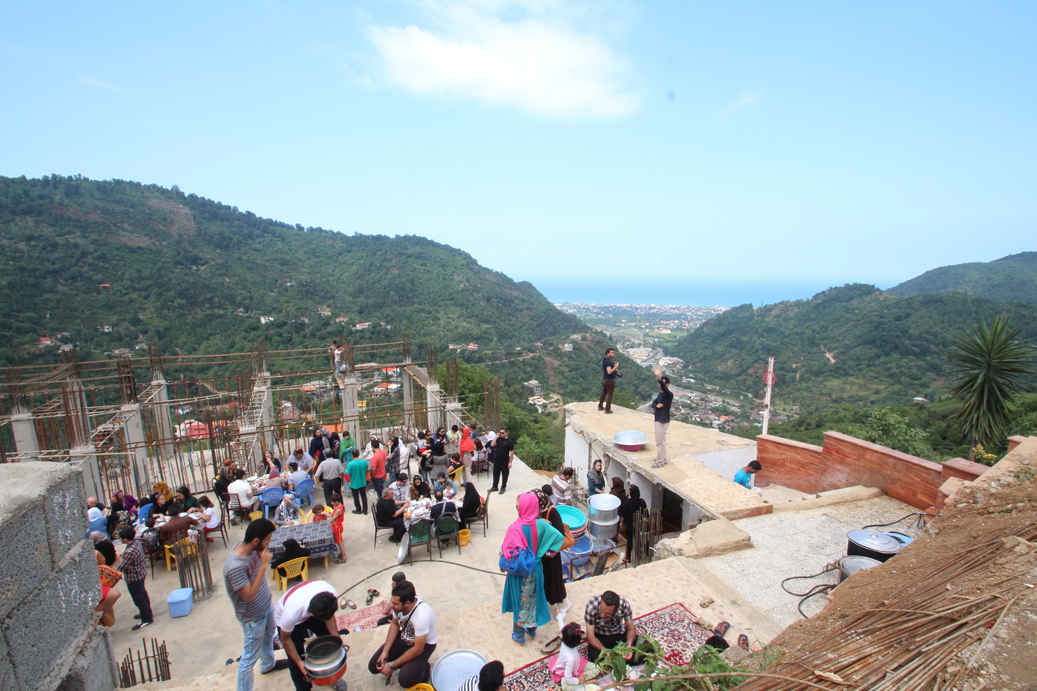
Diners at a popular foodie's destination in Gilan - Khavar Khanum. Word about the restaurant's kebab spread on the internet and they now do 2000 meals a day and are hurriedly constructing an extension.
Diners at a popular foodie’s destination in Gilan – Khavar Khanum. Word about the restaurant’s kebab spread on the internet and they now do 2000 meals a day and are hurriedly constructing an extension.

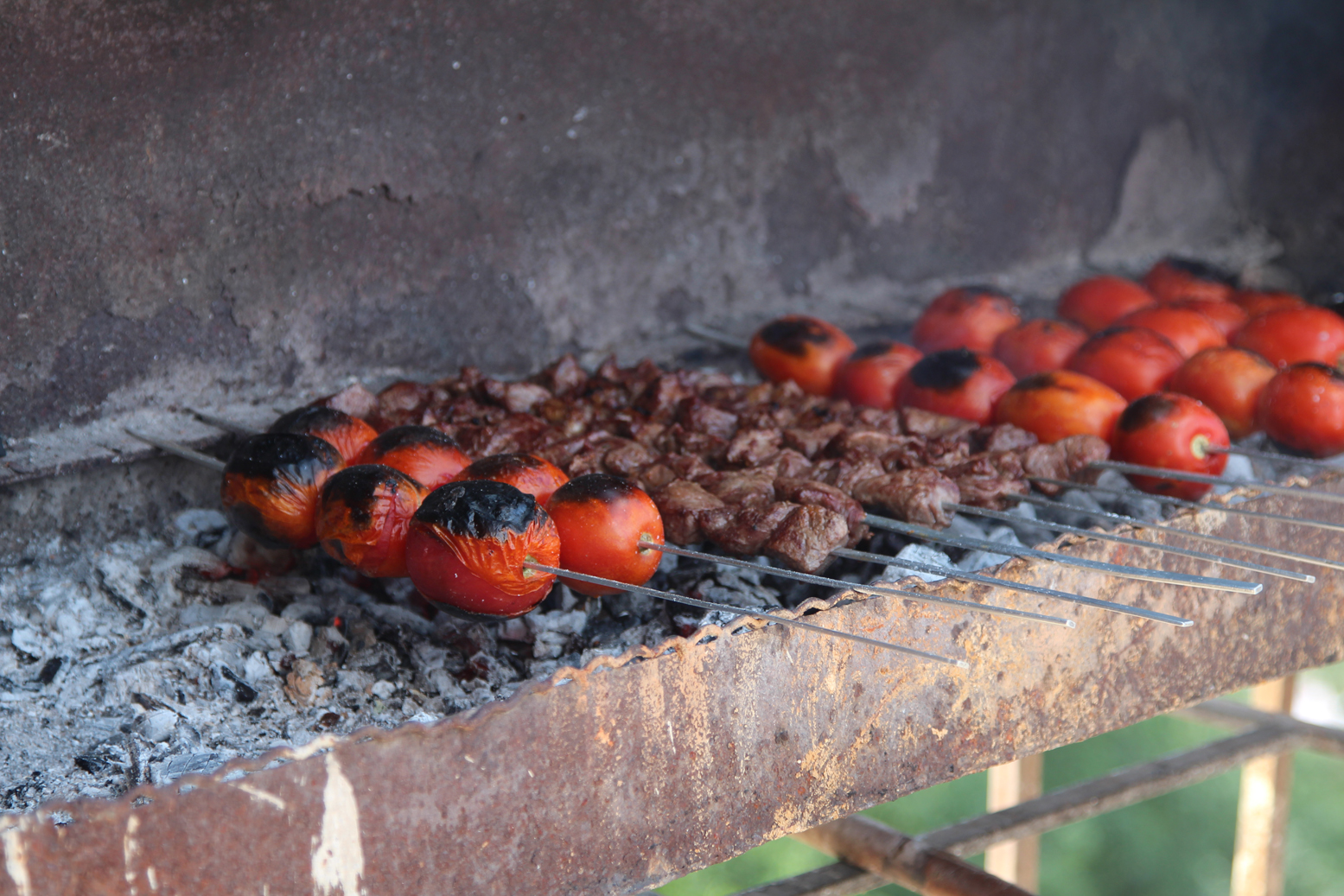
The kebabs at Khavar Khanum on the grill. This was the best meal I've had in Iran. The Gilani taste for sour food extends to the sauce they use on the meat and chicken kebabs.

The kebabs at Khavar Khanum on the grill. This was the best meal I’ve had in Iran. The Gilani taste for sour food extends to the sauce they use on the meat and chicken kebabs.

A frog on the edge of a lake near Lahijan in Gilan. The lake was quite dry and it was hot and very humid so there was little evidence of wildlife until this guy popped up.

A frog on the edge of a lake near Lahijan in Gilan. The lake was quite dry and it was hot and very humid so there was little evidence of wildlife until this guy popped up.

The village of Masouleh, a couple of hours drive into the deep green mountains from Lahijan, is built into a steep hill. So steep, in fact, that they built the houses so that the roof of one house is the front yard and street for the one above. It's popular with Iranian tourists.

The village of Masouleh, a couple of hours drive into the deep green mountains from Lahijan, is built into a steep hill. So steep, in fact, that they built the houses so that the roof of one house is the front yard and street for the one above. It’s popular with Iranian tourists.

Tea wasn't grown in Iran  until the late 1800s. Now it is a permanent presence in daily life and Lahijan in Gilan is where the finest Iranian tea comes from.

Tea wasn’t grown in Iran until the late 1800s. Now it is a permanent presence in daily life and Lahijan in Gilan is where the finest Iranian tea comes from.

My friend Zia introduced me to his friend Afshin who has a tea factory in Lahijan. Even with the sanctions, he sell tea to Lipton in the Netherlands because the quality is so desirable.

My friend Zia introduced me to his friend Afshin who has a tea factory in Lahijan. Even with the sanctions, he sells tea to Lipton in the Netherlands because the quality is so desirable.

Afshin the tea man and his son pose outside his offices in Lahijan. His office is like a meeting place, with friends always passing through for a cup of tea.

Afshin the tea man and his son pose outside his offices in Lahijan. His office is like a meeting place, with friends always passing through for a cup of tea.

Zia outside the fish shop in the port of Bandar Anzali, where we tracked down some caviar. The signs in Gilan are all like this, large and colourful, and they brighten up the sometimes grubby and down-at-heel streets. Farsi script is very attractive and because I can't read them, simple words like "Shilat Fish Restaurant" look like art to me.

Zia outside the fish shop in the port of Bandar Anzali, where we tracked down some caviar. The signs in Gilan are all like this, large and colourful, and they brighten up the sometimes grubby and down-at-heel streets. Farsi script is very attractive and because I can’t read them, simple words like “Shilat Fish Restaurant” look like art to me.

The dam at Manjil, on the drive back from Lahijan to Tehran. This is the watershed, the point where the lush, greenery of Gilan changes into the dry, brown landscape where Tehran sits.

The dam at Manjil, on the drive back from Lahijan to Tehran. This is the watershed, the point where the lush, greenery of Gilan changes into the dry, brown landscape where Tehran sits.

A caravanserai, sits by the Aras River near Jolfa in Iran's far north-west. The Aras forms the narrow border between Iran and Azerbaijan's Nakhchivan province here, and between Iran and Armenia to the east.

A caravanserai, sits by the Aras River near Jolfa in Iran’s far north-west, with the mountains of Azerbaijan in the background. The Aras forms the narrow border between Iran and Azerbaijan’s Nakhchivan province here, and between Iran and Armenia to the east.

The Armenian Orthodox church of St Stephanos near Jolfa and the Nakhchivan border. The church is pre-1600s and has only recently been restored. This part of the world has been racked by war since the early 90s, with Armenia and Azerbaijan pitted against one another and Iran having to maintain relations with both.

The Armenian Orthodox church of St Stephanos near Jolfa and the Nakhchivan border. The church is pre-1600s and has only recently been restored. This part of the world has been racked by war since the early 90s, with Armenia and Azerbaijan pitted against one another and Iran having to maintain relations with both.

Along the Aras, across from Armenia, there was a sign saying "Kordasht Bath Room". My driver stopped, I thought because he needed the toilet, but when I followed him I found it was beautiful old defunct bath house in the middle of nowhere.
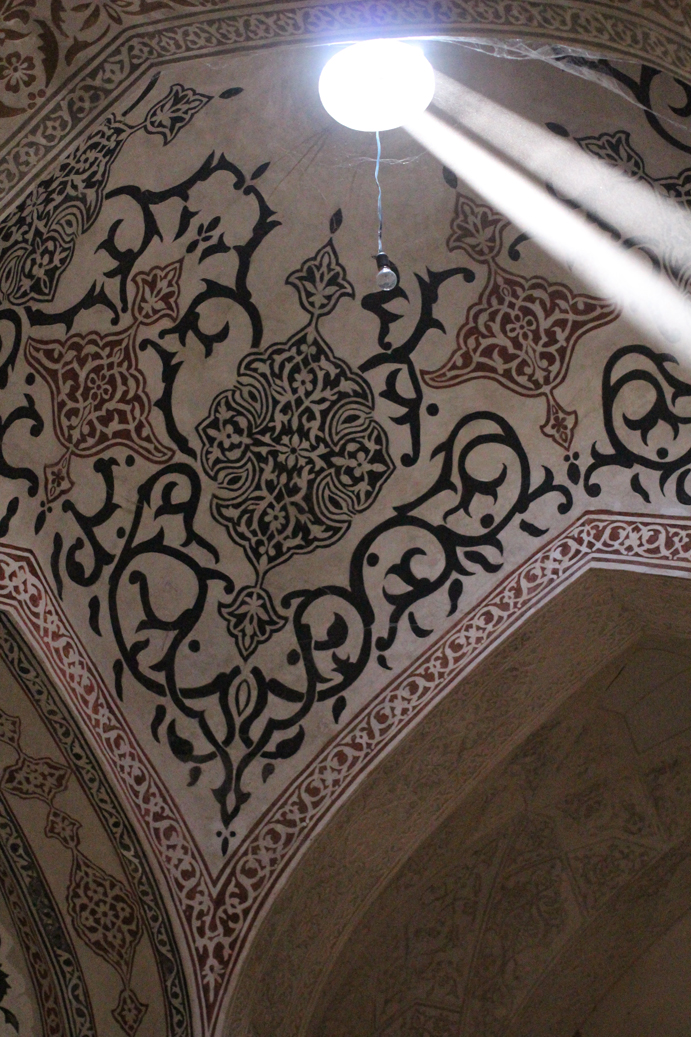
Along the Aras, across from Armenia, there was a sign saying “Kordasht Bath Room”. My driver stopped, I thought because he needed the toilet, but when I followed him I found it was beautiful old defunct bath house in the middle of nowhere.

Many of the interesting stops in the Aras Valley only seem to have opened up since a peace has been reached between Armenia and Turkey-backed Azerbaijan. But there are still regular military posts along the road and the tourist needs to be wary about where he chooses to take photos.
Many of the interesting stops in the Aras Valley only seem to have opened up since a peace has been reached between Armenia and Turkey-backed Azerbaijan. But there are still regular military posts along the road and the tourist needs to be wary about where he chooses to take photos.

Leave a comment

21 August, 2013 · 16:10

The Value of Things

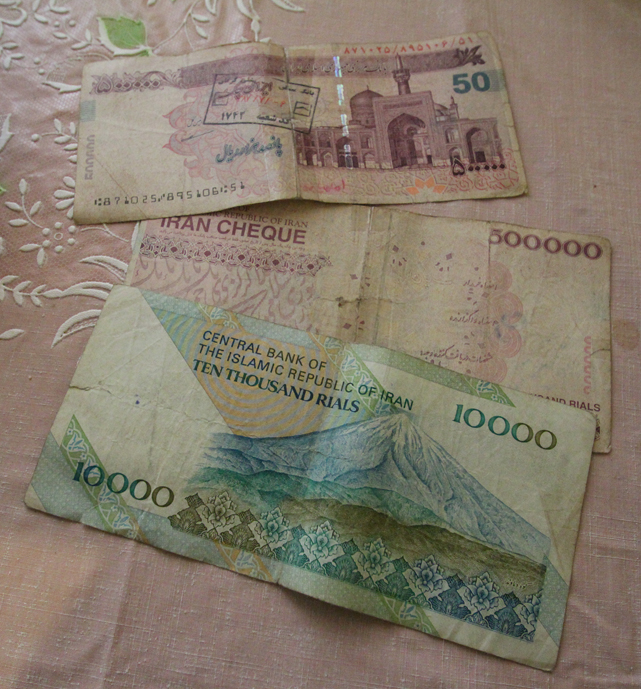
1,010,000 rials - enough for 5 long distance bus trips. Or about 30g of caviar.

1,010,000 rials – enough for 5 long distance bus trips. Or about 30g of caviar.

The currency in Iran seems at first to be one of those things deliberately designed to deceive tourists into parting with their money. Then you remind yourself there are few tourists to confuse, and no one seems to ever rip you off. But as a foreigner, no matter how confident you get with the place, you still find yourself at a shop offering far too little, or far too much, and a shopkeeper will, embarrassingly, reach into your wallet and pull out the required notes himself. It takes a solid 10 days in this country to go through the process of being thoroughly and completely confused.

The gold bazar in Tabriz, where they'll quote US Dollars without asking.

The gold bazar in Tabriz, where they’ll quote US Dollars without asking.

The 5 steps to currency confusion:

1. Check xe.com for the Iranian rial (IRR) to US dollar (USD) rate. Then ignore it. The real rate is 3 times that.

2. The rial is the currency, but no one quotes rial prices. People talk in tomans, an unofficial unit. One toman is 10 rials.

50g of caviar, roughly a week's wages for a professional here.

50g of caviar, roughly a week’s wages for a professional here.

3. The currency is so low, that very few things can be bought for less than 1000 tomans, or “hezar toman”, so often “hezar”, the word for “thousand”, is omitted when they tell you the price. Sometimes they leave out the “toman” too and just quote a 1-, 2- or 3-digit number.

4. This would be manageable if you knew the rough value of whatever it is you’re buying. But the relative value of things here is nothing like in Australia. A 6-hour air-conditioned bus trip (with complimentary snacks) costs 18,000 tomans (5-6 USD). Adobe Photoshop photo editing software costs 1000 tomans (30 US cents). But a flashdisk, to save Photoshop on, still costs about 150,000 tomans (~40 USD). A full tank of petrol – 40,000 tomans (~11 USD). A cup of tea from a chaykhaneh (teahouse) is usually around 1000 toman (30c), but in upmarket parts of Tehran you could be charged ten times that in a European-style cafe. Just 50 grams of locally-caught caviar costs 150,000 tomans, or the equivalent of nearly 4 tanks of petrol.

5. Finally, it’s possible that if they know you’re a foreigner, in certain places like carpet and jewellery shops, they’ll quote prices in US dollars without making it clear.

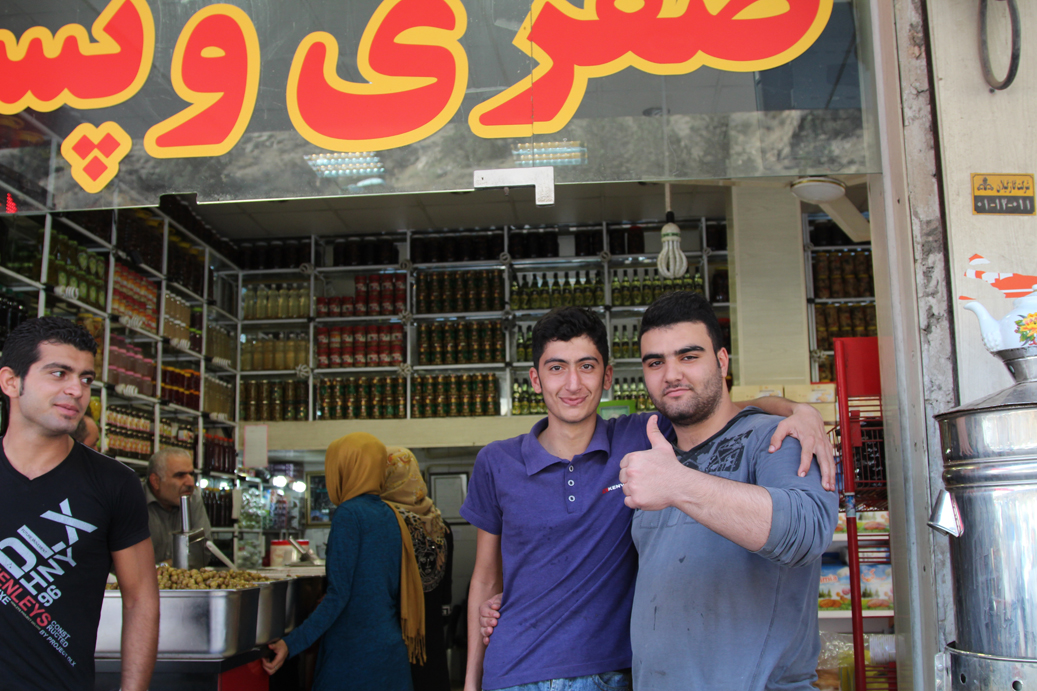
The lads at the olive shop in Rudbar, between Lahijan and Tehran.

The lads at the olive shop in Rudbar, between Lahijan and Tehran.

On the long drive from Lahijan near the Caspian Sea to Tehran, we bought 1kg of olives, 4 boxes of cookies and a bottle of water. The man behind the counter simply said “si o panj” – “thirty five”. Thirty five what? What’s the value of a kilo of olives and locally-baked cookies? Thirty five rials? No way, that’s a fraction of a cent. Thirty five tomans? Doubt it, that’s only one cent. Must be thirty five thousand tomans, then. Three hundred and fifty thousand rials. Ten dollars. Is that cheap? I have no idea any more.

Leave a comment

Filed under Uncategorized

İstanbul

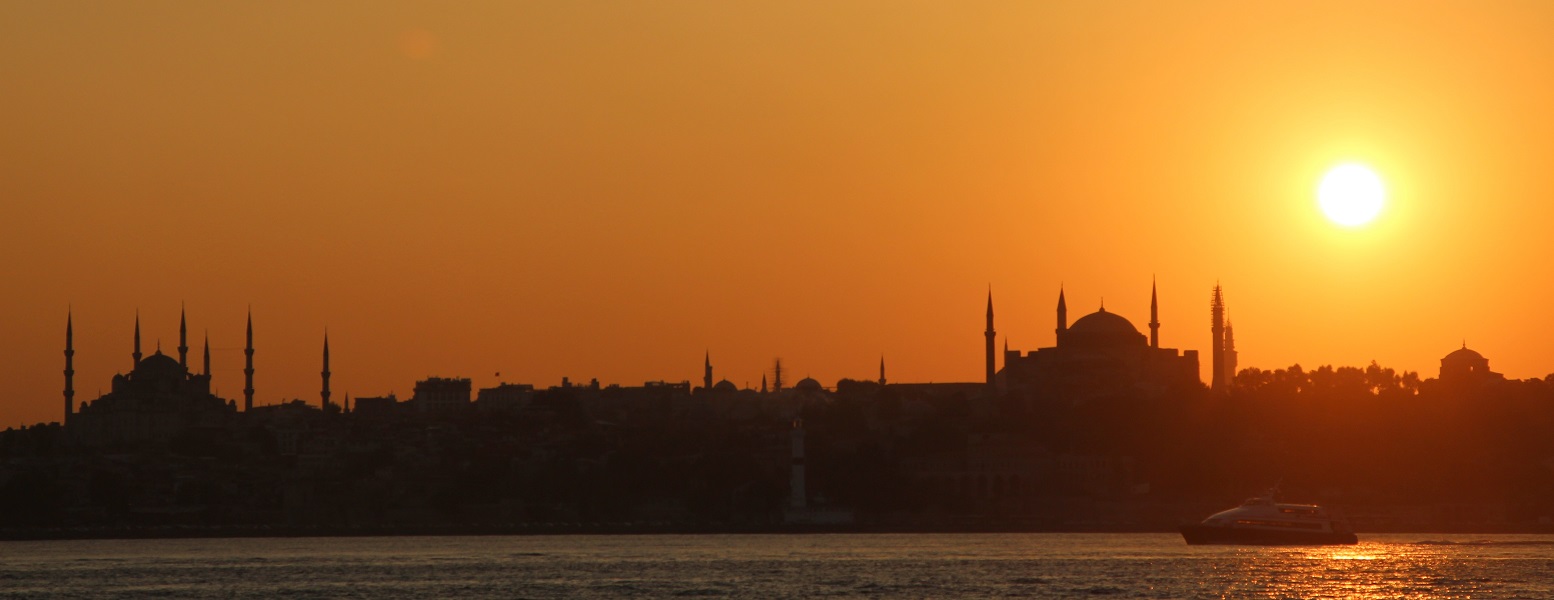
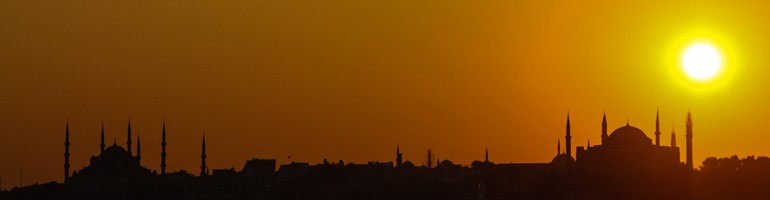
Sunset over the old city from the Kadiköy ferry

Sunset over the old city from the Kadiköy ferry

Its ruins are Roman and look west into Europe, its palaces and mosques are Ottoman. The language, brutish and unintelligible, was carried centuries ago on horseback from the ranges and plains of central Asia, assimilating words from Persian and Arabic along the way. On the tram, the locals’ distant looks pass through you from round, full Asiatic faces the colour of cafe-au-lait. In the old city, home to an embarrassment of riches in Roman ruins, palaces and mosques, the tourist industry feels restrained and dignified – not rapacious, but ever tempted by the armies of naive cruise ship passengers passing through.

A couple at the 6th century Basilica Sistern in the old city

A couple at the 6th century Basilica Sistern in the old city

The call to prayer that rings out in stereo over the rooftops in İstanbul is noticeably different from those in Indonesia and the Arab world. İstanbul’s faith is an open and tolerant Islam softened by the miles and the need to adapt – sufi mysticism still has a visible cultural, if not religious, impact in İstanbul. But the old city is only a tiny part of a metropolis of 14 million. Immediately to the west, the suburbs around Fatih are staunchly religious, conservative and inward-looking – imagine the characters in Deliverance occupying a pocket of Manhattan. Sombre women cloaked head to toe in chador are the norm and there’s barely a smile for the visitor.

Turkish delight, fruits and spices at the Spice Market in the old city

Turkish delight, fruits and spices at the Spice Market in the old city

Unexpectedly, a short ferry ride away on the Asian side, the girls of Kadiköy stride joyous and confident in tight jeans past boutique fashion stores and restaurants with football on the telly. It’s not empty consumerism or a hipster trend, Istanbul is a fluid, maritime European city and Kadiköy has soul. The call to prayer sings out over lanes bustling with busy coffee shops and raki bars in the long, warm evening. Street bands play into the night as Kurdish waiters joke around with busking drummer girls.

It’s different again on the handful of islands to the city’s south, a popular getaway. There the asiatic faces fall away, replaced by mediterranean features and weathered, dark chocolate skin. The syllables sound Greek, orthodox Christian monasteries top the hills and the day moves at a languid pace, as in Crete, Sicily and Lipari. And it’s in the view from the Princes Islands, these sleepy refuges from the hectic city, that the scale of İstanbul is most apparent. The city is built up in almost a 180 degree vista – it’s buildings as far as the eye can see into Europe to the left and into Asia to the right. Pockets of high rise pop up randomly along the coasts and you know that somewhere, behind the hills, up the Bosphorus, there’s more.

View of just part of Asian side of the city from the island of Büyükada

View of just part of Asian side of the city from the island of Büyükada

And the Bosphorus flows quietly, comfortable in the knowledge that it’s the reason İstanbul exists. Its silent waters are all that separates Southern Europe from Asia, and all that unites the Black Sea with the Mediterranean. They hold hostage the warm water ports of 6 nations – Georgia, Russia, Ukraine, Moldova, Romania and Bulgaria. Geography rarely gets the credit it deserves for shaping history, but in Istanbul it’s inescapable. The container ships that loom over your passenger ferry, and the dozens moored off the European shore, need these waters and they echo ancient trade routes that have enriched these shores for millennia, and still continue to do so.

A container ship on the Bosphorus with the new city in the background

A container ship on the Bosphorus with the new city in the background

İstanbul is the capital of an ancient power and the cultural heart of a nation aspiring to the EU. It’s a romantic cruise on an ancient waterway and a Russian container hulk headed for Brazil. It’s fiercely secular and devoutly religious. It’s a whirling dervish and an installation at the İstanbul Modern. And İstanbul is no open air museum – it’s a city very much of the present, protecting the treasures of its past.

Comments Off on İstanbul

Filed under Uncategorized

Baths

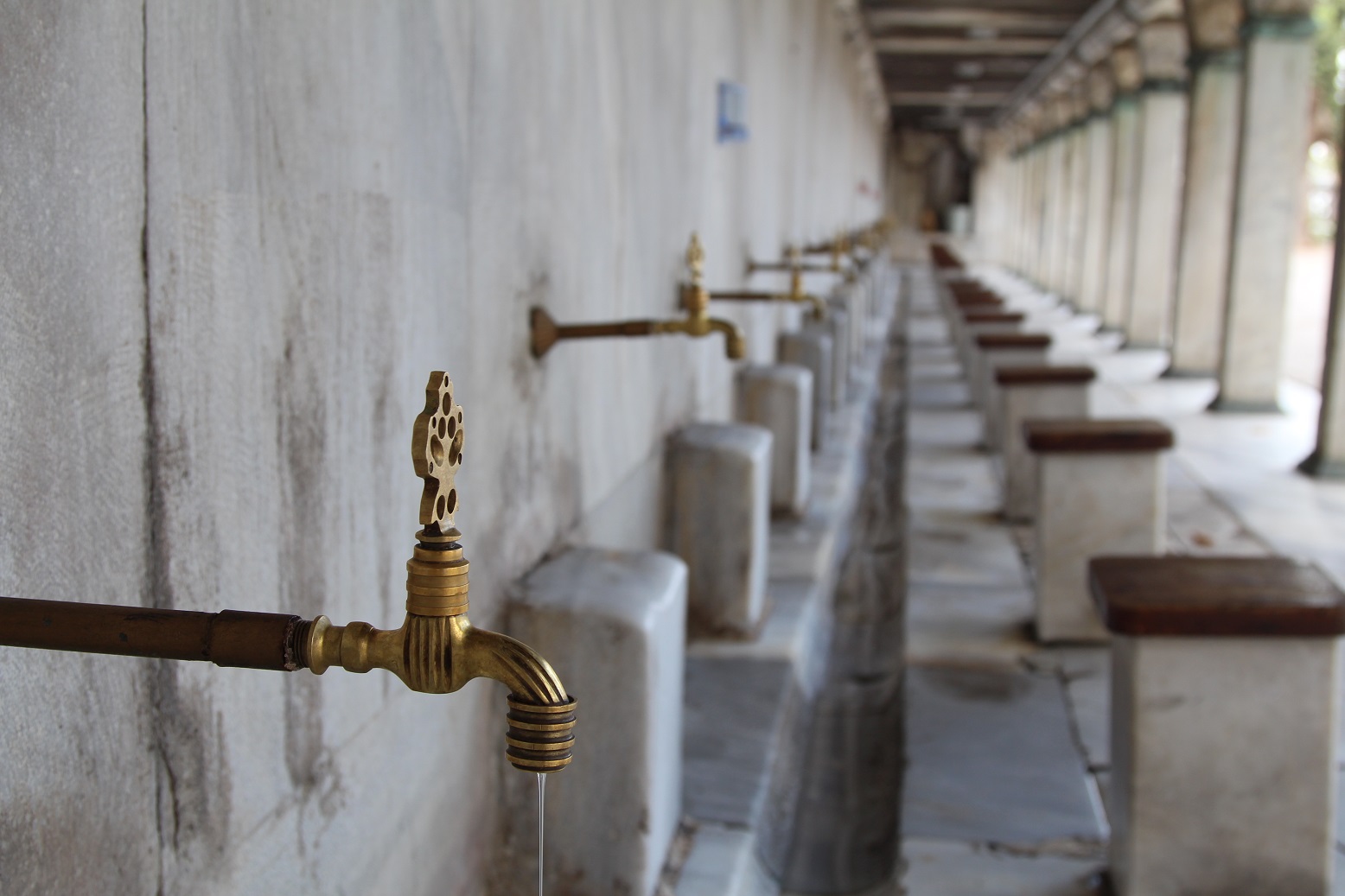
The washing facilities at the Blue Mosque in Istanbul's Old City

The washing facilities at the Blue Mosque in Istanbul’s Old City

Why didn’t anyone tell me about Turkish baths?

The first step is to completely undress, put all of your clothes and valuables into a locker and don only what looks like a sarong and a pair of plastic slippers. Then the attendant shows you into the bath room and walks away, closing the door behind him. The air is dense and humid and the room is clad completely in white marble. There’s a hexagonal slab in the centre about the height of a man’s knee and several metres in diameter. Around the walls of the room there are a series of knee-high sinks, complete with hot and cold taps and ample space either side for a person to sit. If you’re lucky, you’re totally alone. The only sound ringing through the heavy space is a drip somewhere in the system. Your first job is to sit against the wall and drench yourself with the pail that sits in each sink. The sarong stays on – it’s meant to get wet. They leave you for a little longer than you need, necessitating some quiet meditation. Just as you start to wonder if they’ve forgotten about you, a man with a big moustache walks in clad in a smile and a similar sarong, carrying a heavy mit. He orders you to lie face down on the marble slab. Then he begins to rub your exposed skin with his mit. It’s like a giant cat’s tongue, and the dead grey skin falls away with each scrub. You turn over and he scrubs your chest and stomach. You’re not sure whether to close your eyes or leave them open staring at him as he goes about his work.

Then stage 2 begins. He places at your feet a bucket of warm water and in his other hand he holds a bag with a weight in the bottom. He dunks the bag in the bucket and it emerges enormous like a fabric balloon. He dangles it over you and squeezes it from the top with his other hand. A cloud of milk white suds billows from the bag and lands on your body, condensing as a thick film of soap. He does this several times, after each time rubbing the soap in and massaging your muscles. He goes between your fingers, between your toes, and then you turn over and he soaps and pushes the knots out of your back in the same way.
Finally, he orders you back to the seat next to the sink, and there he washes your hair, throws your neck around and douses you with waves of hot, then warm, then steadily cooler water. With the last rinse he leaves you, the echo of the drips still ringing through the empty room.

The man returns through the humidity holding out a dry towel and dry sarong. You drape the towel over your shoulders, replace the sarong, and follow him out of the room. The bath door closes with a thud and you’re back in reality. You return to your locker, dry yourself, dress yourself and replace the slippers with your shoes.

Outsourcing your own hygiene. It’s brilliant. I did this twice in my first 3 days here, and both times out of necessity – the first was after a 10 hour flight while my Sultanahmet hotel room was unavailable and the second simply to avoid showering in the horrid facilities of the Cihangir apartment I was renting. The first bathhouse was 500 years old and eye-wateringly expensive, while the second was from the 80s and unfeasibly cheap.

(there are no photos of the baths. Mainly because I was worried about the humidity doing things to my lenses. But also because it’s an odd thing to request)

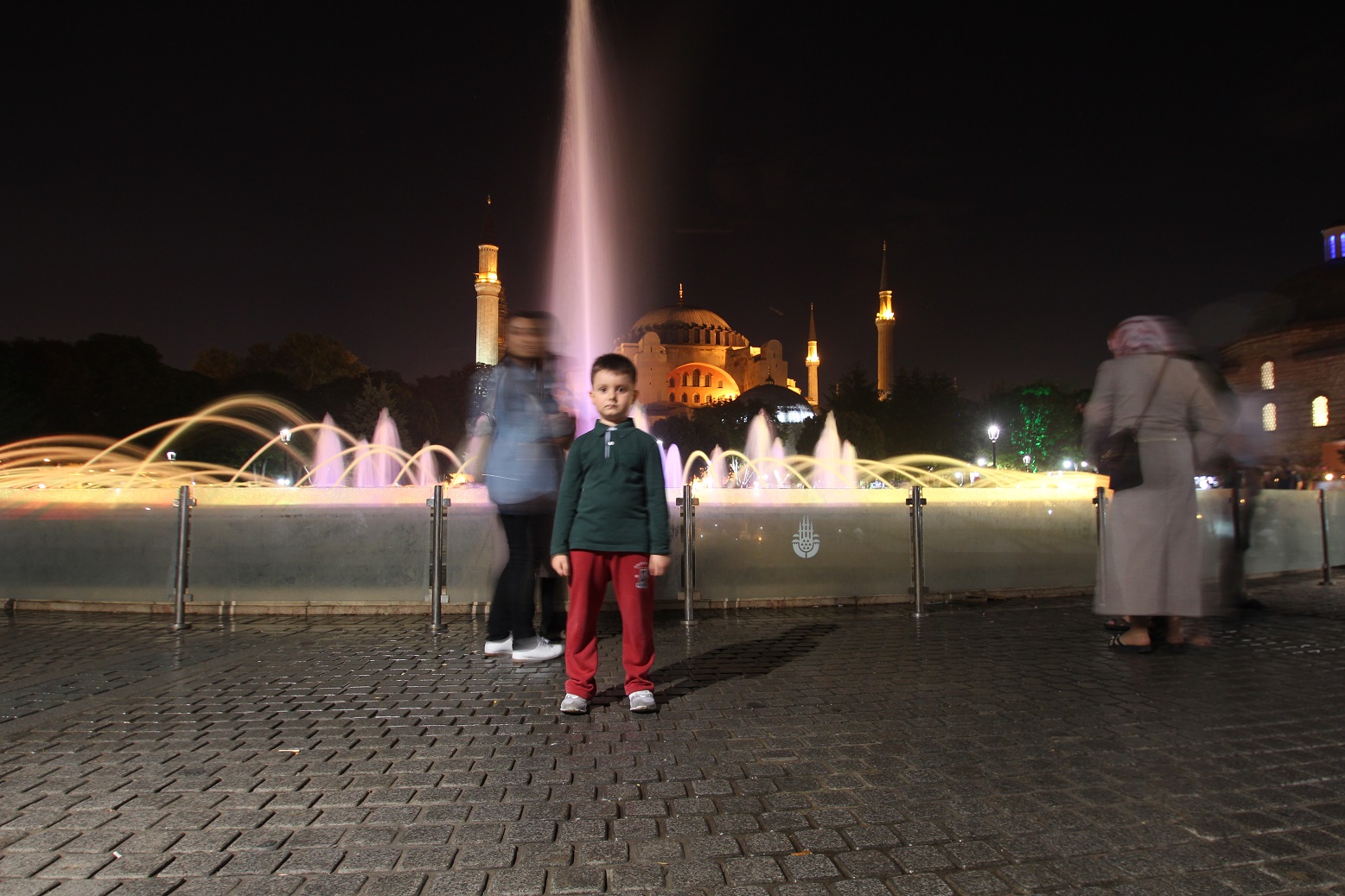
A kid stood still for me in front of the Aya Sofya (Hagia Sofia)

A kid stood still for me in front of the Aya Sofya (Hagia Sofia)

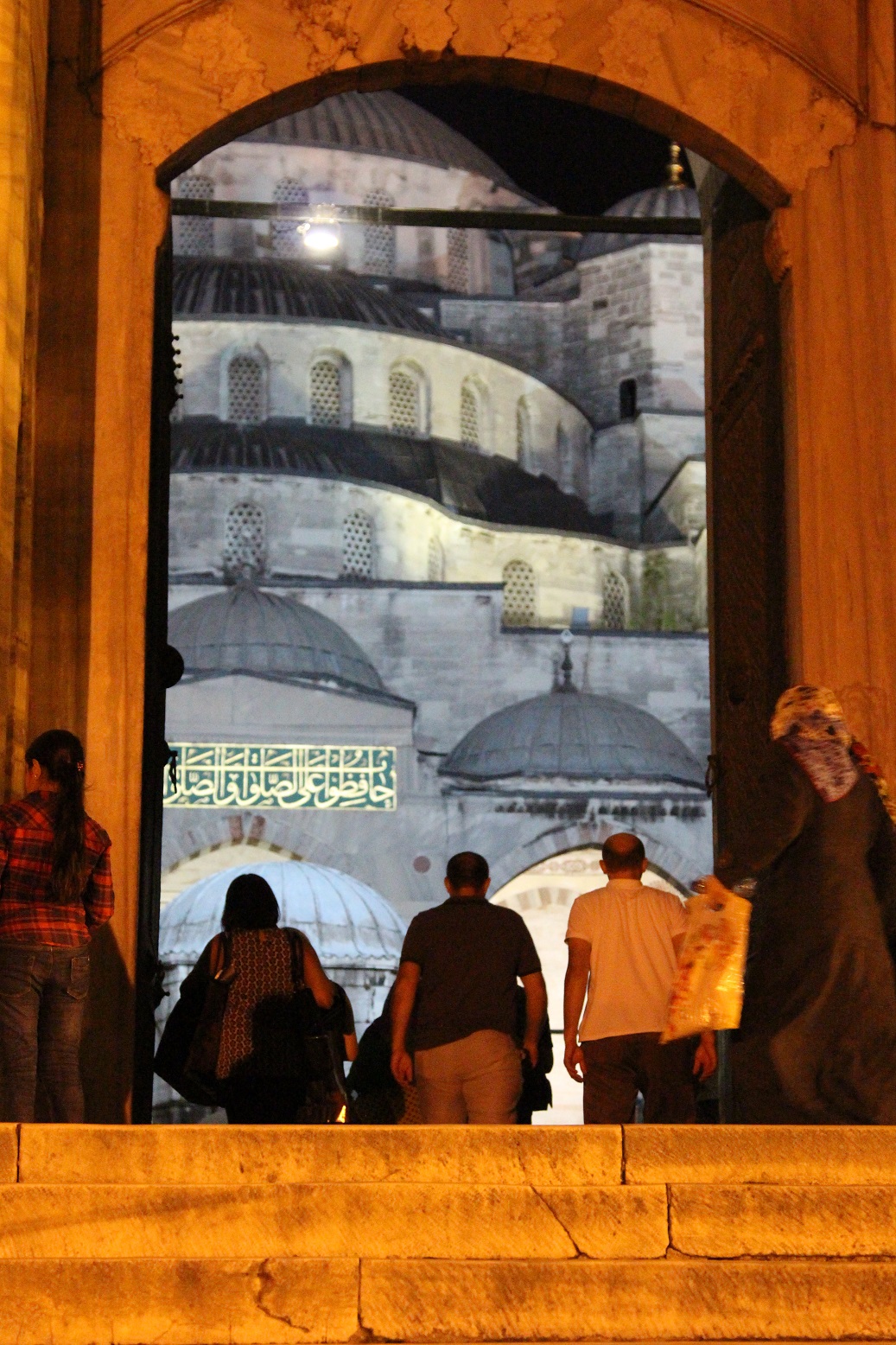
Crowds entering the Blue Mosque for taraweeh prayers

Crowds entering the Blue Mosque for taraweeh prayers


Ramadan sweets for sale on the Hippodrome in Istanbul's old city

Ramadan sweets for sale on the Hippodrome in Istanbul’s old city


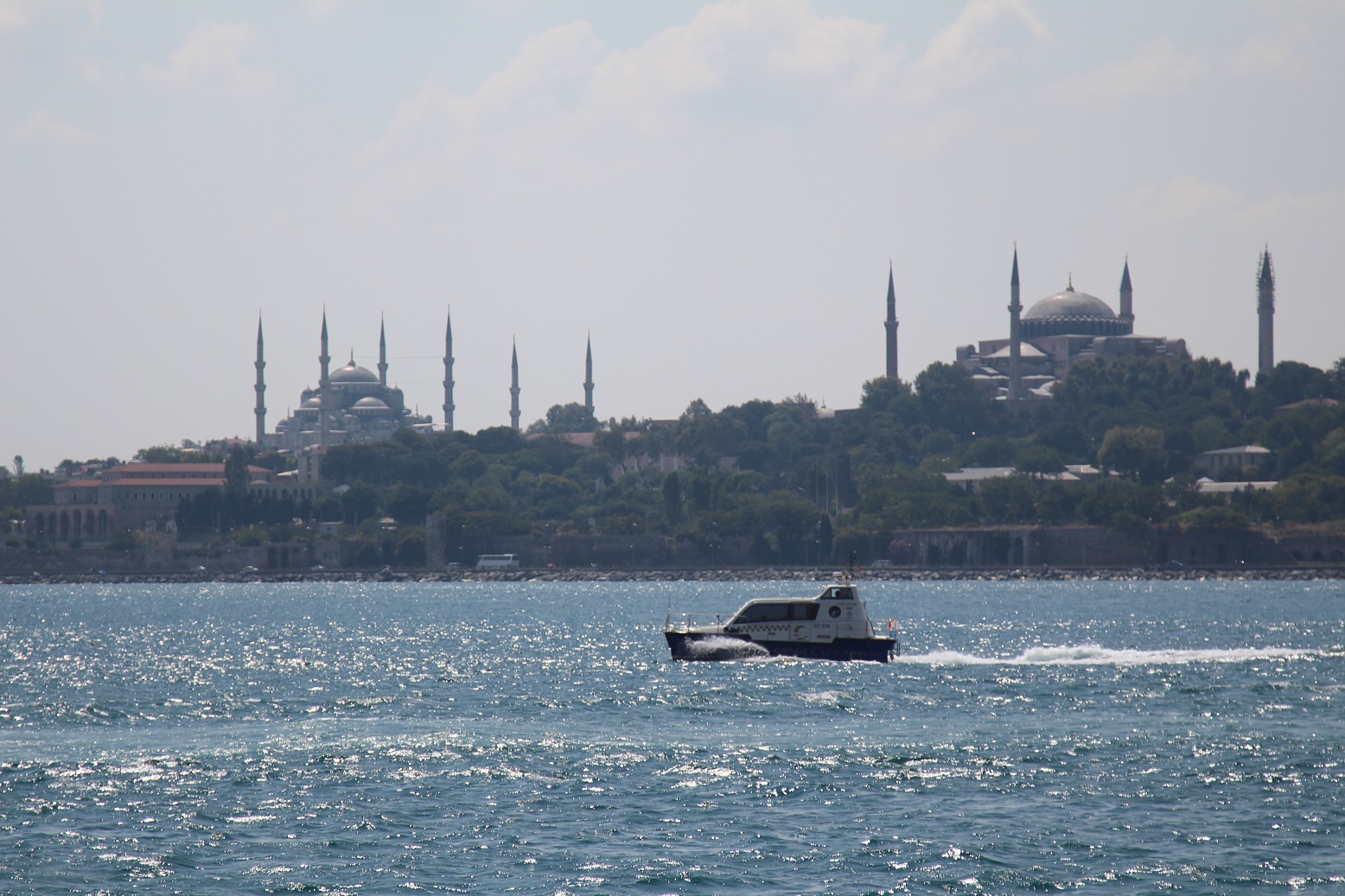
The old city as seen from the Kadikoy Ferry on the Bosphorus. L-R The Blue Mosque and Aya Sofya

The old city as seen from the Kadikoy Ferry on the Bosphorus. L-R The Blue Mosque and Aya Sofya


The interior of the Blue Mosque (Sultanahmet Mosque), complete with Australian cruise ship tourists' heads at the bottom of your picture

The interior of the Blue Mosque (Sultanahmet Mosque), complete with Australian cruise ship tourists’ heads at the bottom of your picture


Cheese scrolls for breakfast made by an Armenian woman: a real rarity (not the cheese scrolls)

Cheese scrolls for breakfast made by an Armenian woman: a real rarity (not the cheese scrolls)


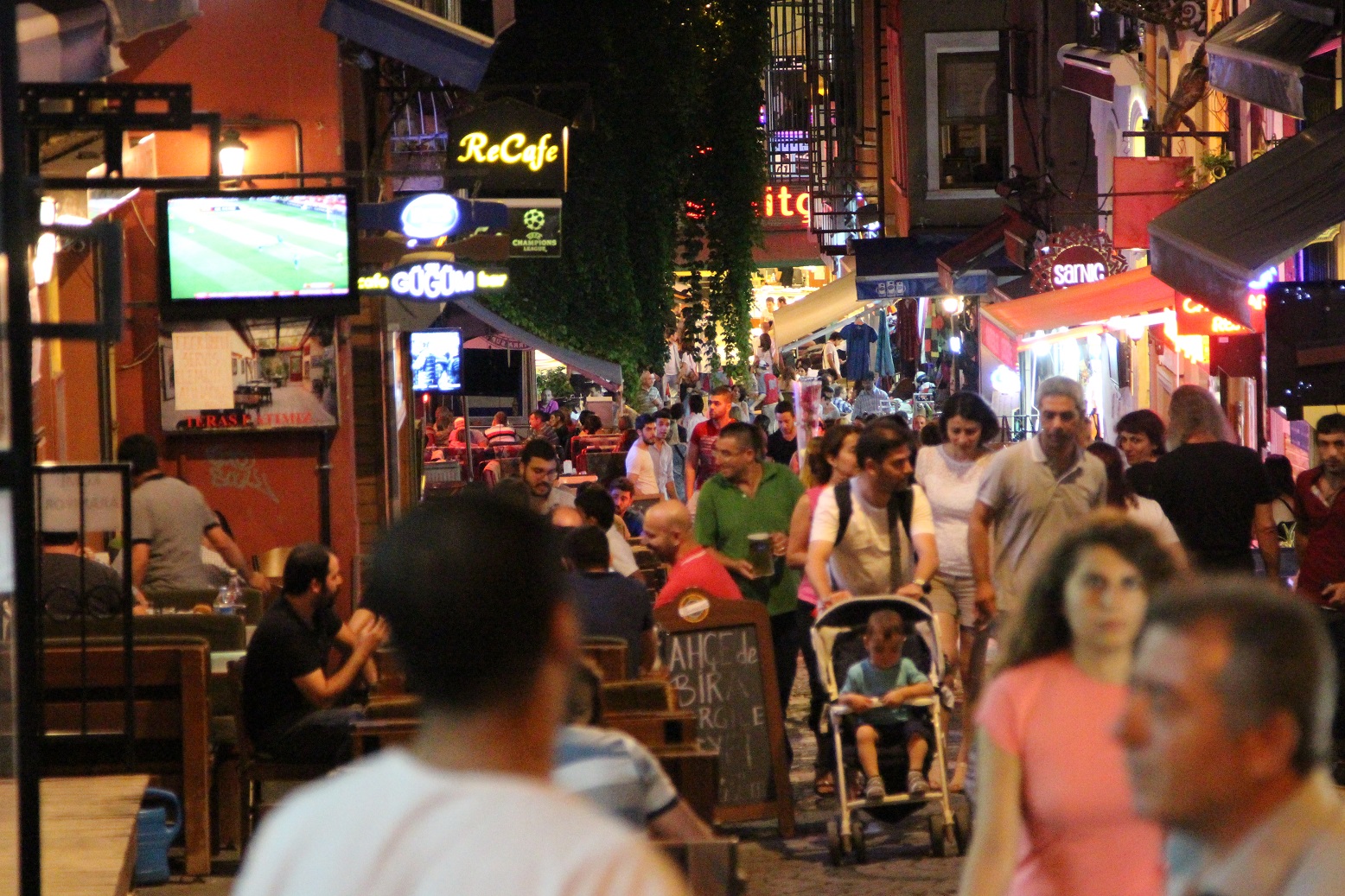
The streets of Kadikoy, from where I am posting this (sounds of street gypsy band and dancing not included)

The streets of Kadikoy, from where I am posting this (sounds of street gypsy band and dancing not included)

2 Comments

Filed under Uncategorized

A Long Day In Istanbul

Blue Mosque

Looks like Pinky brought her best cut-off denim for the church and mosque visits

The journey here reminded me of the hilarious characters that pop up on the road. After half a day wandering Kuala Lumpur I felt like I’d well and truly left Australia. Until boarding for the flight to Istanbul: there were so many Turkish-Australians, it felt like half of western Sydney had crammed themselves into the departure lounge. Orderly, sedate KL had been interrupted suddenly by a wave of Mediterranean behaviour – whole families clad in tracksuits and mullets rushed to board the plane like cattle scattered by buckshot. Enormous robed women wedged themselves into the bulkhead rows and promptly began snoring. It was, however, very convivial, everyone chatting to each other, switching effortlessly between Turkish and fluent Bogan. They even clapped after the successful landing, something I thought was completely foreign to Australia.

In the line for Passport Control I encountered my first Ugly American for a while. The male half of a couple in front of me was doing his best Woody Allen impression, muttering about the nature of the change he might get from his visa fee long before there was actually anything to complain about. The whole lengthy process of waiting in line was punctuated by his miserable muted fury. His silent wife (or carer, maybe?) did nothing to calm him down, but never agreed with him either. At one point a lone woman nervously clutching a Turkmenistan passport had to move past him in the line. He saw her coming, stood in her way and whined “Say ‘excuse me’ and I might let you past”. She got past him so he turned on his poor wife/carer/escort “All they gotta say is ‘excuse me’…”, failing to grasp the significance of travel to foreign countries where people speak foreign languages.

Crossing the courtyard of the Blue Mosque I overheard a fat South African man shout at his Turkish guide “Too mini peepul hya!” as he was presumably told that the crowd of people at prayers meant he had to use a different entrance. Hoping to enter the mosque, with less people around clearly, he was wearing shorts and a t-shirt with a stylised middle finger salute on the back. Very considerate.

Finally there’s the quirky breakfast attendant at the hotel who keeps dropping Gallipoli jokes on me. I didn’t know there were Gallipoli jokes. Apparently I should tell my ‘president’ that we should attack from the east next time, we might have more chance of winning? That’s not even a joke, it’s just geopolitically creepy.

There will be more about Istanbul soon.

Rob

Leave a comment

Filed under Uncategorized

Packing List

Turkey
Shorts
T shirts
Sneakers
Flip flops
Laptop
Phone
Kindle

Iran
Trousers
Shirts
Presents
Check laptop for unislamic material
Check Kindle for unislamic material
Check phone for unislamic material

Georgia
Hiking boots
Hiking pants
Fleece
GPS

Leave a comment

Filed under Uncategorized